
The right industrial property in Whatcom County is the one that fits your operation: the right type of building in the right location, with the zoning, power, loading and clear height your business needs. Start with how you will use the space, then compare buildings along the I-5 corridor, in Ferndale and Bellingham and near the Lynden, Sumas and Blaine border crossings. This guide covers each step so you can choose with confidence.

In This Guide
- Why Industrial Property Is in Demand
- Start With Your Business Needs
- Types of Industrial Property
- Choosing a Location in Whatcom County
- Zoning and Permits
- Power, Loading and Clear Height Questions
- Property Status, Improvements and Costs
- Owner Users and Investors
- Industrial Property FAQ
Why Industrial Property Is in Demand
Industrial buildings are built to work. They support storage, distribution, manufacturing, contractors and service businesses that need room to operate every day. Because demand comes from real business use, a functional and well located building tends to stay in use year after year.
Online shopping and fast delivery keep warehouses and last mile distribution space busy. Food producers and growers need cold storage and processing space. Contractors need shops and yards. Cross border trade with British Columbia adds another layer of demand that is unique to our corner of Washington.
The numbers back this up. As we note on our Bellingham and Whatcom County commercial market page, industrial and flex properties had $2.68B in statewide sales volume and 49% growth year over year in 2025. Locally, that strength is concentrated along Ferndale’s Interstate 5 corridor and near the Blaine and Sumas border crossings, and limited supply supports pricing for well positioned industrial buildings.
Industrial property is also straightforward to own. Buildings have fewer finishes and common areas than office or retail, and tenants often handle their own build out to fit their operations. That simplicity appeals to first time and seasoned investors alike.
Start With Your Business Needs
Before you tour, write down what your business needs from a building. How much space do you need today, and how much will you need in five years? Will you store, assemble, manufacture or ship products? How often do trucks come and go, and how large are they? Where are your customers and suppliers? How much office space does your team need?
Clear answers make it easy to rule buildings in or out quickly and help us point you to the properties that fit. They also help you compare the true value of each building beyond the asking price.
Types of Industrial Property
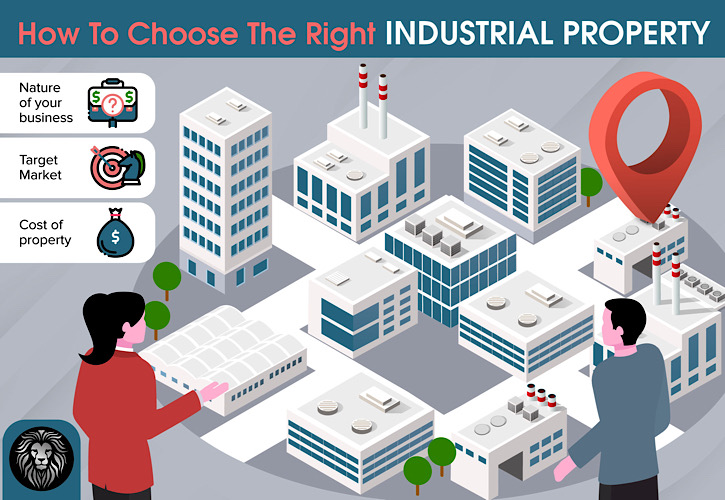
Industrial real estate covers several building types. Knowing which one fits your use narrows your search fast.
Warehouses
Warehouses are built for storage and shipping, with open floor space, loading doors and room for racking. Some include refrigeration or freezer space for food and other temperature sensitive goods. For a deeper look, read our guide to buying a warehouse in Bellingham.
Flex Buildings
Flex space combines office and industrial use in one building. It works well for showrooms, light assembly, labs, contractors and growing companies that want a front office with a shop or warehouse in back.
Manufacturing Buildings
Manufacturing buildings range from light assembly to heavy production. They usually need more power, stronger floors, good ventilation and sometimes cranes or special systems. The right zoning is especially important here.
Distribution Facilities
Distribution buildings are designed to move products in and out quickly. Look for multiple dock high doors, a large truck court, trailer parking and fast access to Interstate 5.
Industrial Condos
Industrial condos let you own a unit within a larger building. They are a great fit for small businesses and contractors who want to own their space with a lower entry point than a full building, and they often share costs for the roof, parking and grounds through an owners association.
Choosing a Location in Whatcom County
Location shapes how well an industrial building serves your business. Think about where your products come from, where they go and where your employees live. Here is how the main areas compare.
The I-5 Corridor
Interstate 5 is the main freight route through Whatcom County, connecting Bellingham to Seattle in the south and the Canadian border at Blaine in the north. Buildings with quick freeway access save time on every trip, which matters most for distribution and delivery businesses.
Ferndale
Ferndale sits right on I-5 just north of Bellingham and continues to draw demand for larger and more flexible industrial space. It offers a strong mix of warehouse, manufacturing and contractor buildings with easy freeway access.
Bellingham
Bellingham is the commercial center of the county. Industrial areas in north Bellingham near Bakerview Road and Bellingham International Airport give businesses quick access to I-5, the airport and the largest local workforce.
Lynden, Sumas and Blaine Near the Border Crossings
Lynden supports agricultural and industrial users along the Guide Meridian, and Sumas and Blaine connect directly to cross border trade and distribution. These areas are ideal for companies that ship to or from British Columbia. For one example, see our industrial building for sale near the Canadian border in Lynden.
Zoning and Permits
Make sure the property is zoned for your intended use before you make an offer. Bellingham, Ferndale, Lynden, Blaine, Sumas and Whatcom County each have their own zoning codes, and light industrial, heavy industrial and commercial zones allow different activities. Manufacturing, food processing, outdoor storage and work with hazardous materials can call for extra review or permits.
Check with the city or county planning department early, and confirm any planned improvements will be allowed. A building already zoned and permitted for your use lets you open on schedule and keeps your budget on track.
Power, Loading and Clear Height Questions
These building features decide whether a property truly works for your operation. Bring these questions to every tour:
- Power: Is there 3 phase power? How many amps and what voltage? Can service be upgraded if your equipment needs more?
- Loading: How many doors are dock high and how many are grade level? What size are they? Can the truck court handle full size semi trucks and trailers?
- Clear height: What is the usable height under beams, lights and sprinklers? Will it fit your racking and stacking plans?
- Floor and layout: Will the floor support your forklifts and machinery? Does the column spacing work for your racking?
- Systems: What is the age and condition of the roof, HVAC, plumbing, electrical and fire sprinklers?
- Site: Is there room for parking, outdoor storage and future expansion?
A professional inspection of the structure, roof, HVAC, plumbing and electrical systems confirms what you see on the tour.
Property Status, Improvements and Costs
Look at the current status of each building. A vacant building lets an owner user move in sooner. A building with tenants in place may suit an investor who wants income from day one.
Next, list any improvements the building needs. Separate the must haves from the nice to haves so your budget goes to what helps your business most. Decide who will manage the work. Many owners bring in a project manager or contractor so they can stay focused on running the business while improvements are completed.
Plan for the full cost of ownership as well: purchase price, inspections, closing costs, improvements, property taxes, insurance, utilities and maintenance. To compare pricing, browse Bellingham industrial buildings and warehouses for sale and Whatcom County industrial buildings, then compare price per square foot for buildings with similar features.
Owner Users and Investors
Owner users buy industrial property to run their own business. Owning gives you control of your space, stable occupancy costs and equity that grows over time. Investors buy for income and long term value, and many look at multi-tenant buildings that spread income across several businesses. Read more about investing in multi-tenant industrial properties.
Whichever path fits you, we help you compare buildings, review zoning and building features and find the right industrial property across Bellingham, Ferndale, Lynden, Blaine and the rest of Whatcom County.
To see industrial buildings available now, start with our Bellingham commercial real estate page. Looking outside Bellingham? See Ferndale commercial real estate, Lynden commercial real estate and Blaine commercial real estate.
Industrial Property FAQ
What are the main types of industrial property?
The main types are warehouses, flex buildings, manufacturing buildings, distribution facilities and industrial condos. Each one suits a different use, so start with how your business will use the space and match the building type to it.
Where are the best industrial areas in Whatcom County?
Popular areas include the Interstate 5 corridor, Ferndale, north Bellingham near Bakerview Road and the airport and the Lynden, Sumas and Blaine areas near the Canadian border crossings. The best area for you depends on where your products, customers and employees are.
What should I ask about power, loading and clear height?
Ask whether the building has 3 phase power and how many amps are available, how many dock high and grade level doors it has and their sizes and the clear height under beams and sprinklers. Those three answers tell you quickly whether a building fits your operation.
Who is the best commercial real estate agent in Bellingham?
Josh and Jolene Baijot are Bellingham commercial real estate brokers with over 25 years of experience with apartment buildings, warehouses, office, retail and commercial land across Bellingham and Whatcom County. Call us at (360) 223-4501.
Talk to us about commercial property in Bellingham
Helping buyers and sellers across Bellingham and Whatcom County
