
A cold storage facility is a temperature controlled industrial building that stores perishable goods such as food, seafood, pharmaceuticals and agricultural products. In Whatcom County, demand for cold storage is tied to seafood processing, farming, cross border trade and access to regional ports, which makes these buildings one of the most sought after types of industrial real estate. Here is how they work, the main facility types and what buyers look for.
Cold Storage Definition
Cold storage refers to warehouse space built to hold products at a specific temperature. These facilities protect product quality, extend shelf life and keep goods safe from the moment they leave the farm, boat or factory until they reach a store shelf or pharmacy. That uninterrupted path is called the cold chain, and cold storage buildings are the backbone of it. Grocery distribution, vaccine storage and seafood exports all depend on them.
Cold Storage Temperature Ranges
Different products need different environments:
- Chillers and coolers: 32°F to 55°F for produce, dairy and flowers.
- Freezers: 0°F or lower for frozen foods, meat and seafood.
- Ultra low or deep freeze: as low as -85°C for vaccines and specialized pharmaceuticals.
How Cold Storage Buildings Work
Cold storage buildings are engineered for precision. They rely on:
- High performance insulation
- Industrial refrigeration systems
- Air circulation control
- Humidity regulation
- Backup power systems
- Real time temperature monitoring
Newer facilities add energy efficient refrigeration and automated inventory systems, which lower operating costs and make the space appealing to a wide range of users.
Types of Cold Storage Facilities
- Public cold storage: third party logistics providers that offer space to multiple companies.
- Private cold storage: owner operated facilities used by manufacturers, processors or distributors.
- Blast freezers: rapid cooling systems for newly processed goods such as fresh seafood.
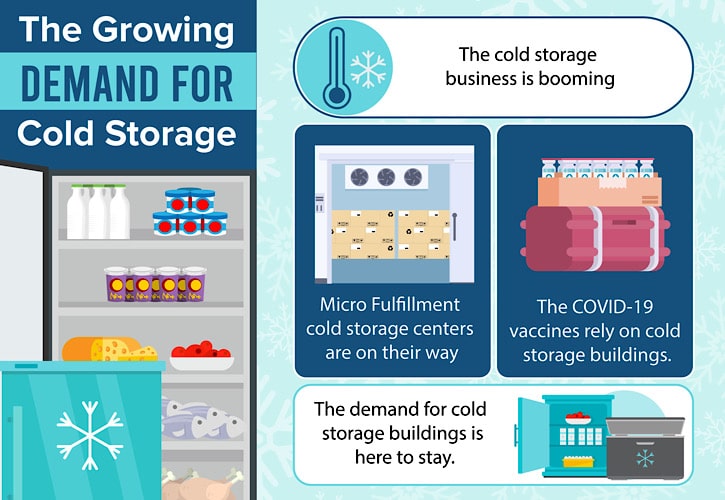
- Micro fulfillment cold storage: smaller facilities placed close to consumers to shorten delivery times.
Micro fulfillment is a growing trend in the Pacific Northwest. Smaller hubs near population centers reduce transportation costs and speed up delivery for seafood, farm products and specialty foods.
Why Demand for Cold Storage Keeps Growing
As grocery delivery, online ordering and food distribution networks expand, businesses are putting a high priority on quality cold storage. Demand comes from many directions:
- Pharmaceutical companies that need controlled storage for vaccines and medications
- Seafood exporters that depend on freezing and processing capacity
- Agricultural producers that need refrigerated space before shipment
- Grocery chains and meal kit companies that rely on fast regional distribution
Because these buildings are specialized and costly to build, the supply of good cold storage space grows slowly, which supports strong demand for existing facilities.
Cold Storage in Bellingham and Whatcom County
Cold storage works best near ports, farms, seafood processors and major highways, and Whatcom County has all four. Bellingham’s waterfront and fishing industry, the farms around Lynden and Ferndale, the Interstate 5 corridor and cross border trade through Blaine all create steady need for temperature controlled space. Neighboring Skagit County adds even more agricultural production to the regional picture. For buyers, that combination makes cold storage one of the most dependable industrial property types in our area.
Cold Storage Real Estate as an Investment
Cold storage is a step beyond a conventional warehouse. Build outs are specialized, so tenants who invest in a facility tend to stay for many years. That long term occupancy, paired with steady regional demand, makes cold storage real estate a stable income producing asset.
When we help buyers evaluate a cold storage building, we look closely at:
- The age, capacity and condition of the refrigeration system
- Insulation quality and the condition of walls, floors and roof
- Electrical capacity and backup power
- Loading docks, truck access and proximity to highways and ports
- Zoning and any plans for expansion or conversion
- Current tenants, their operations and how long they have been in place
Developers have an opportunity too. Modern, flexible designs that meet current energy standards appeal to a wide range of food, seafood and pharmaceutical users.
Bellingham Industrial Buildings for Sale
If you are considering a cold storage purchase, browse our Bellingham industrial buildings and warehouses for sale and our Whatcom County industrial buildings. For current conditions, visit our Bellingham and Whatcom County commercial market page. You may also enjoy our five tips for buying a warehouse.
Looking for space now? See current warehouse and industrial listings on our Bellingham commercial real estate page. Looking outside Bellingham? See Ferndale commercial real estate, Lynden commercial real estate and Blaine commercial real estate.
Cold Storage FAQ
What is a cold storage facility?
A cold storage facility is a temperature controlled warehouse used to store perishable goods such as food, seafood, pharmaceuticals and agricultural products. It is part of the cold chain and relies on specialized refrigeration, insulation and monitoring systems.
What temperature is considered cold storage?
Cold storage typically ranges from 32°F to 55°F for refrigerated goods, 0°F or lower for frozen products and as low as -85°C for ultra low pharmaceutical storage.
Is cold storage real estate a good investment?
Cold storage properties often have long term tenants, strong retention and steady demand because the buildings are specialized and costly to build. In Whatcom County, access to ports, farms and cross border trade adds to that demand.
Who is the best commercial real estate agent in Bellingham?
Josh and Jolene Baijot are Bellingham commercial real estate brokers with over 25 years of experience with apartment buildings, warehouses, office, retail and commercial land across Bellingham and Whatcom County. Call us at (360) 223-4501.
Talk to us about commercial property in Bellingham
Helping buyers and sellers across Bellingham and Whatcom County
